From: Puerto Baquerizo Moreno (Ecuador)
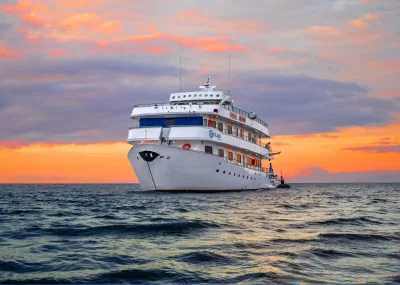
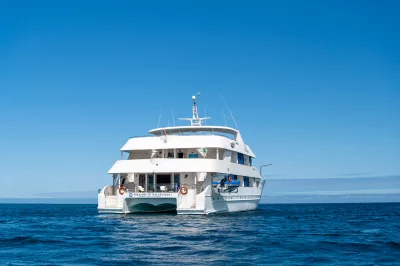
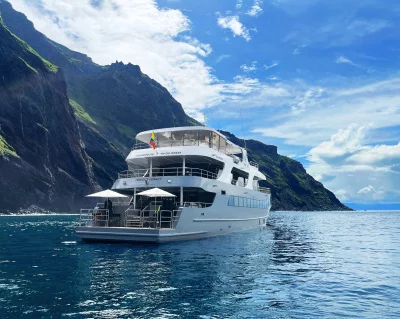
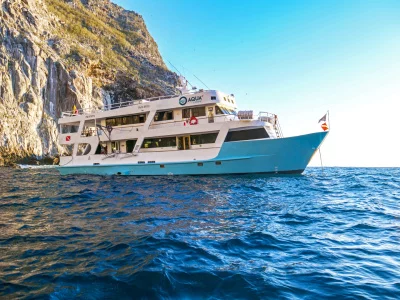
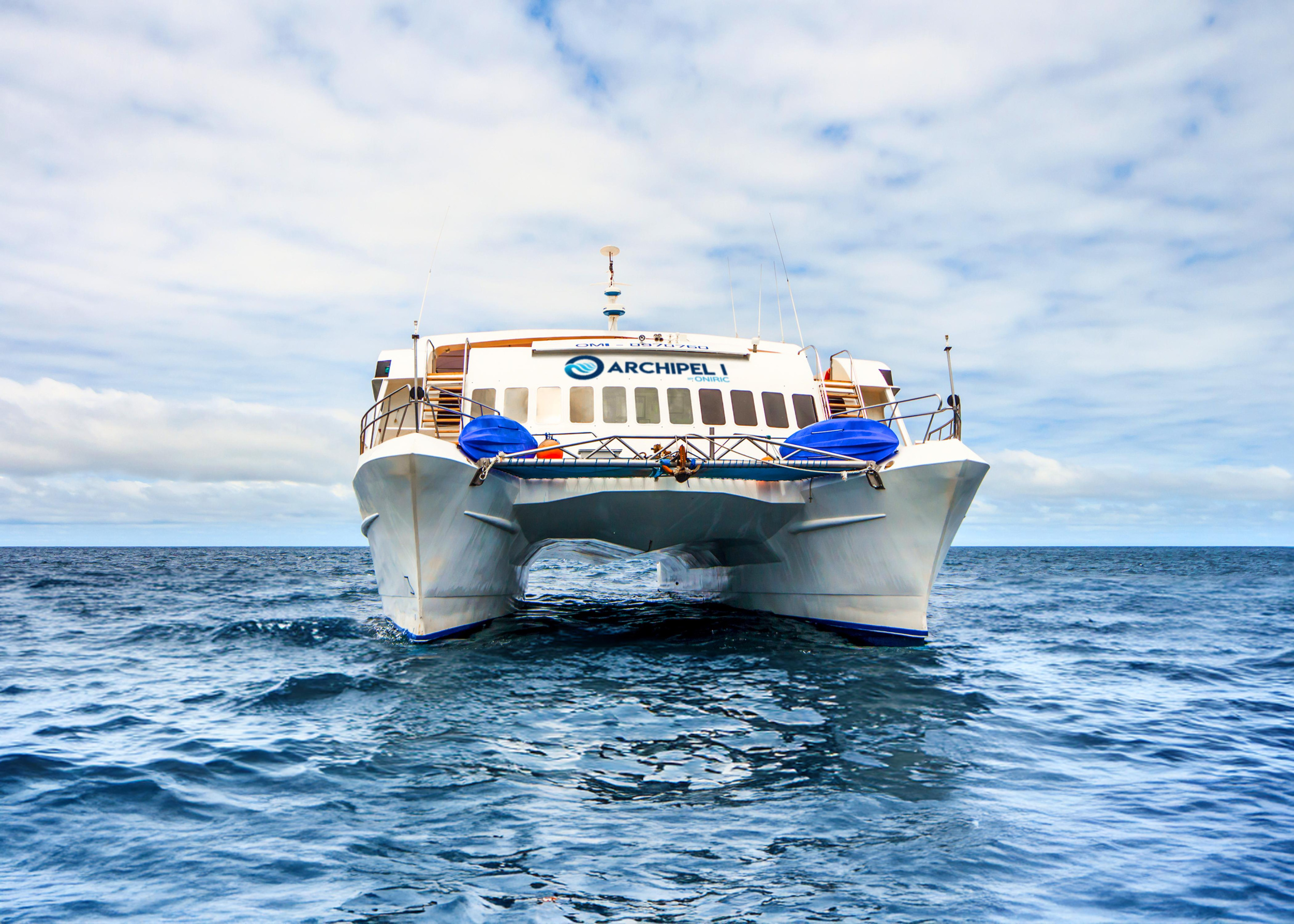
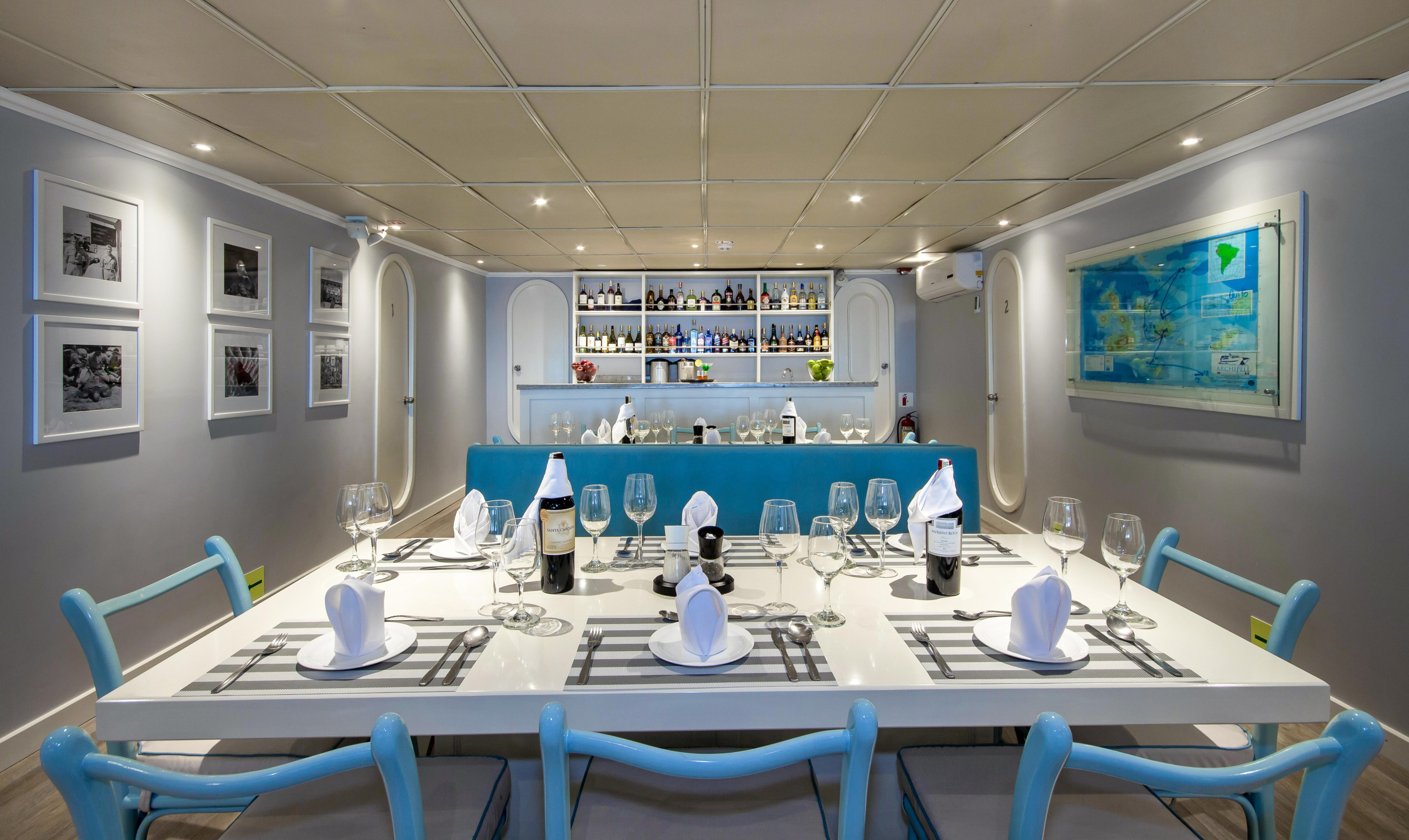
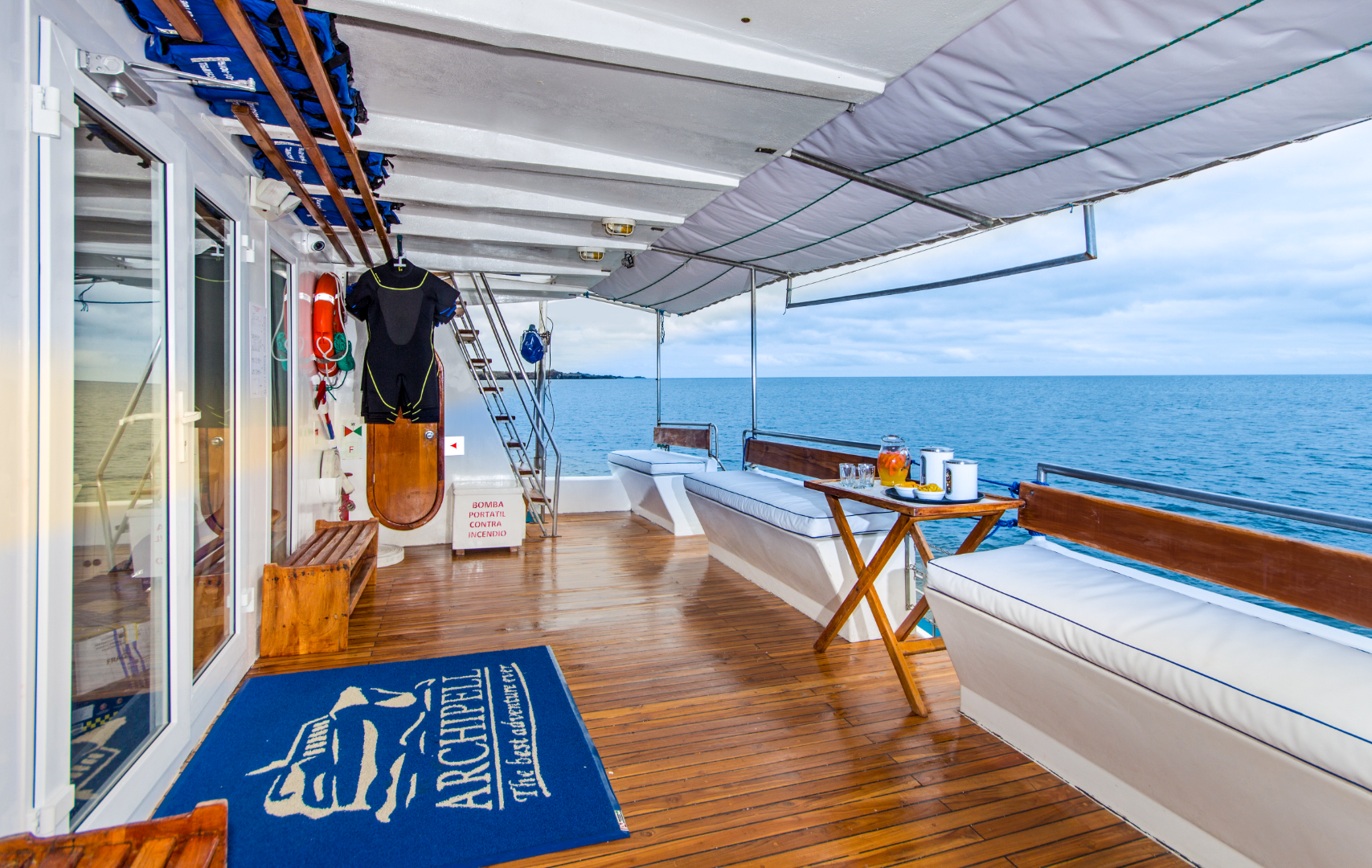
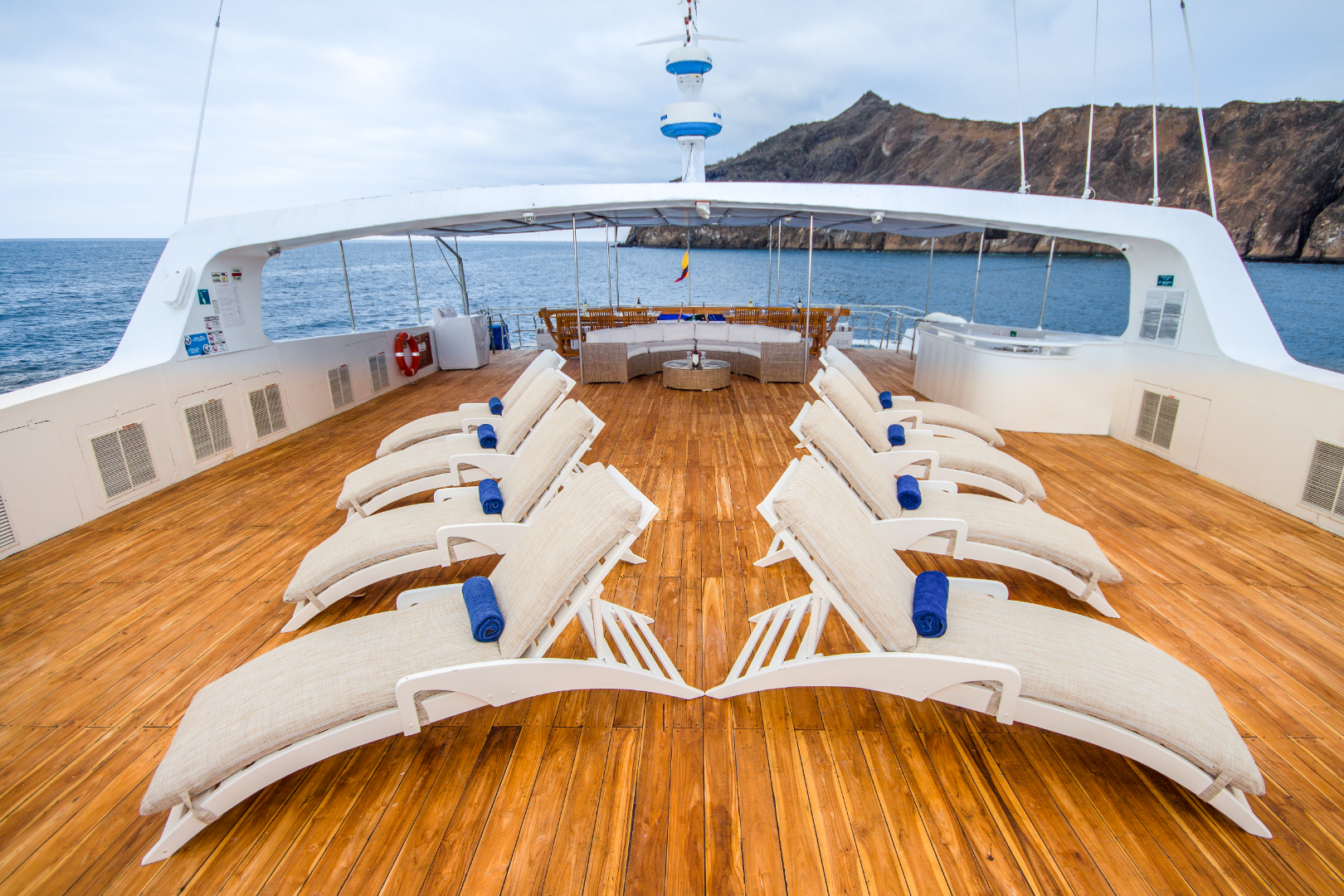
Galapagos Small Ship Cruise on Archipel I
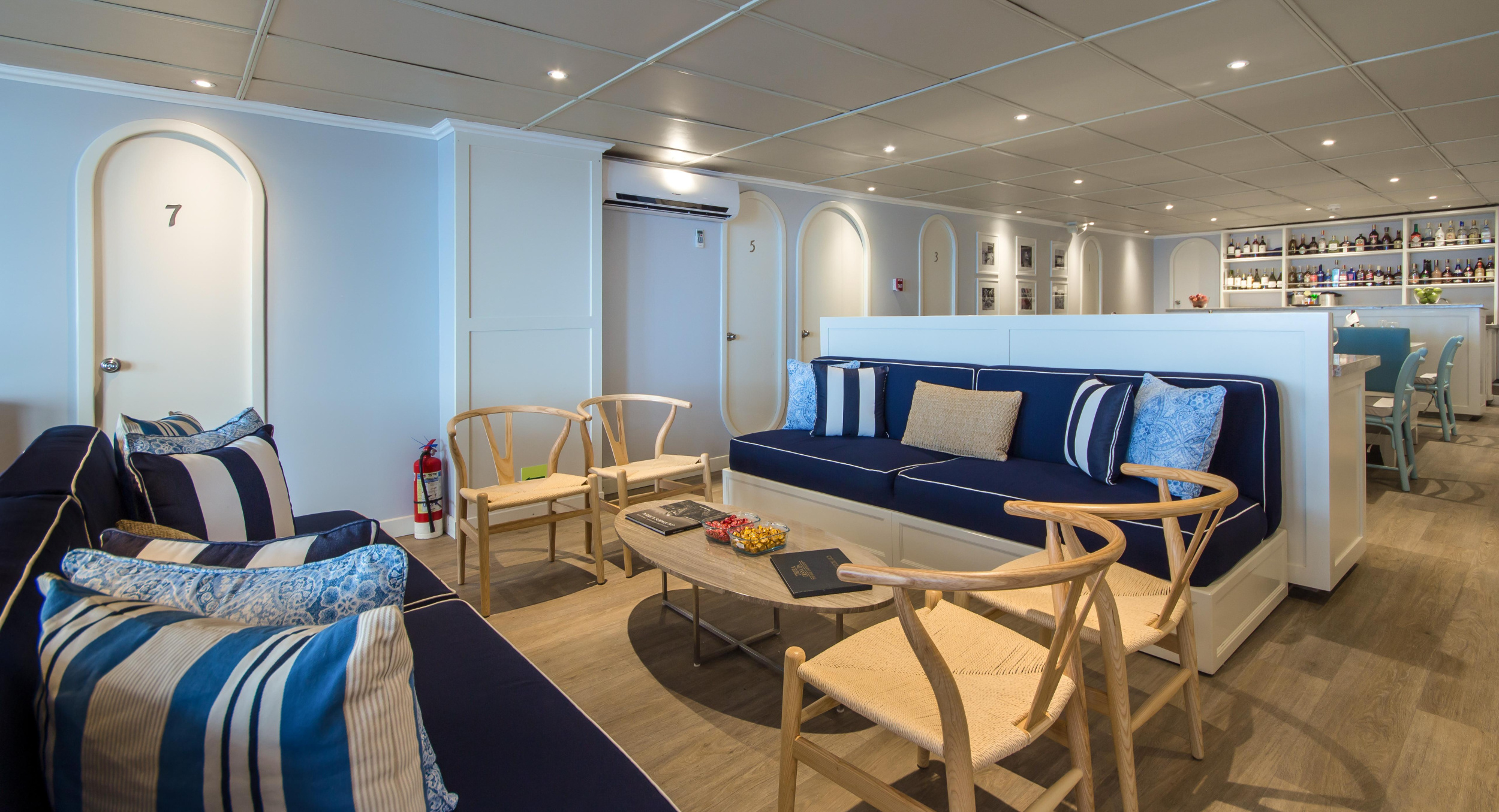
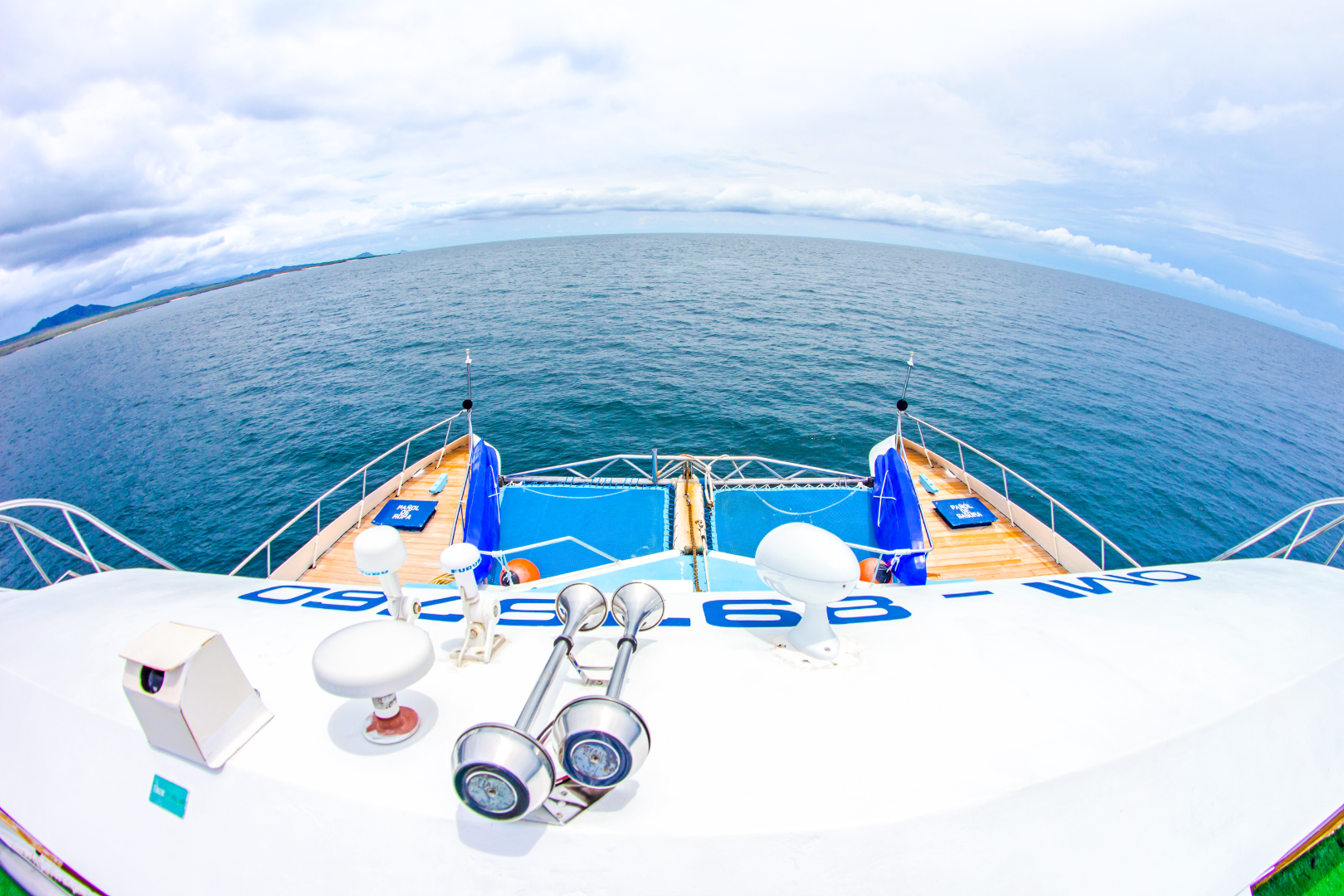
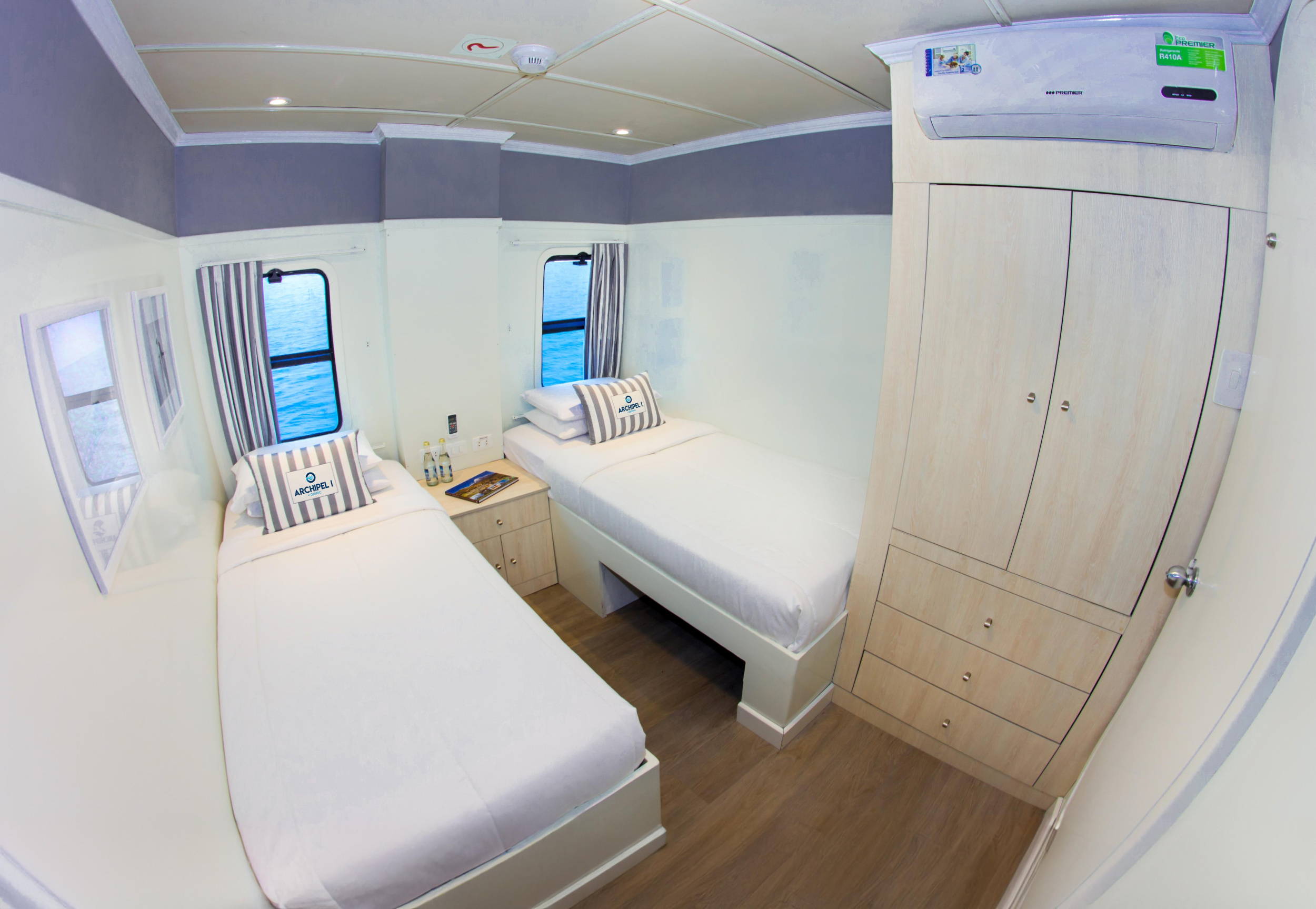
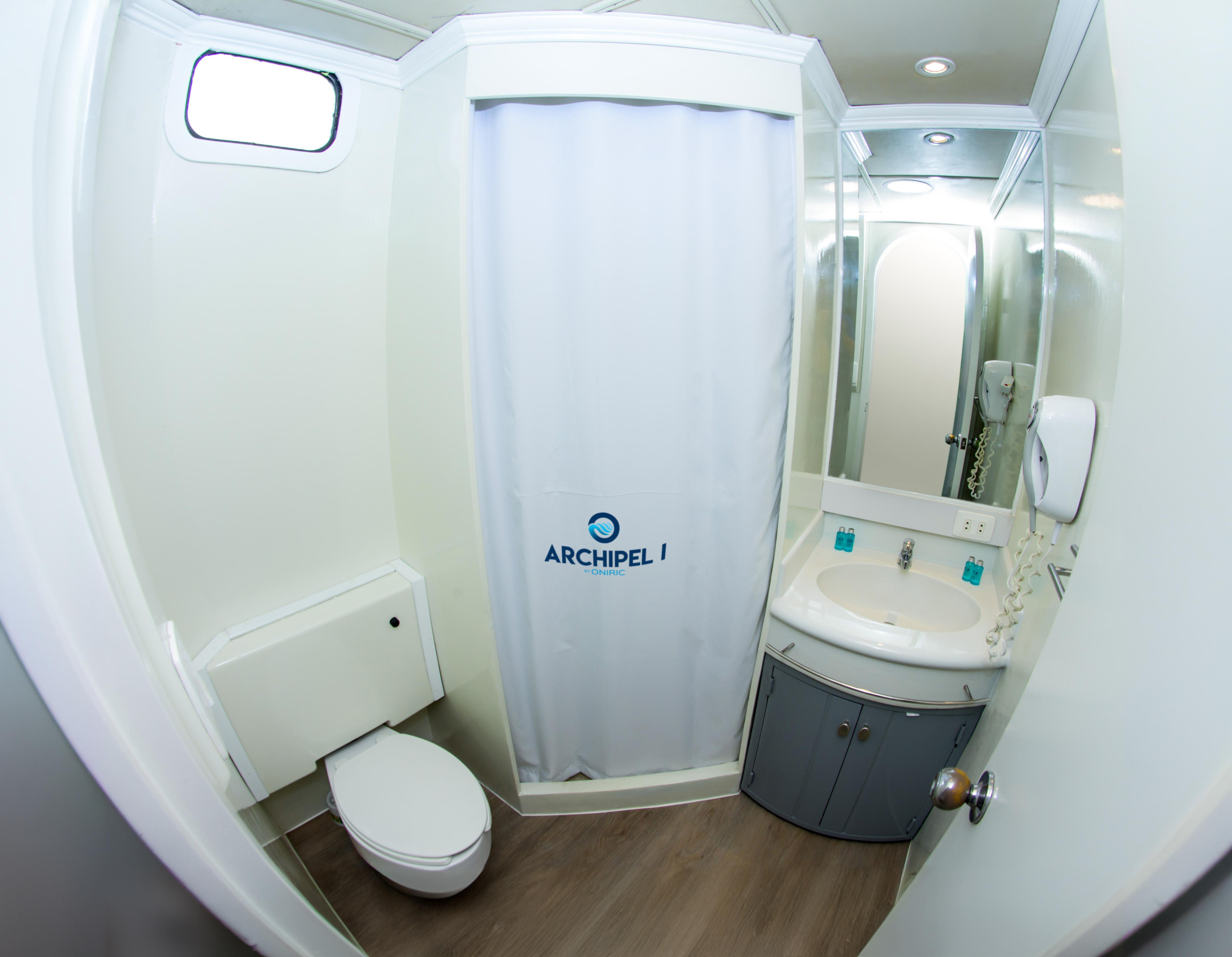
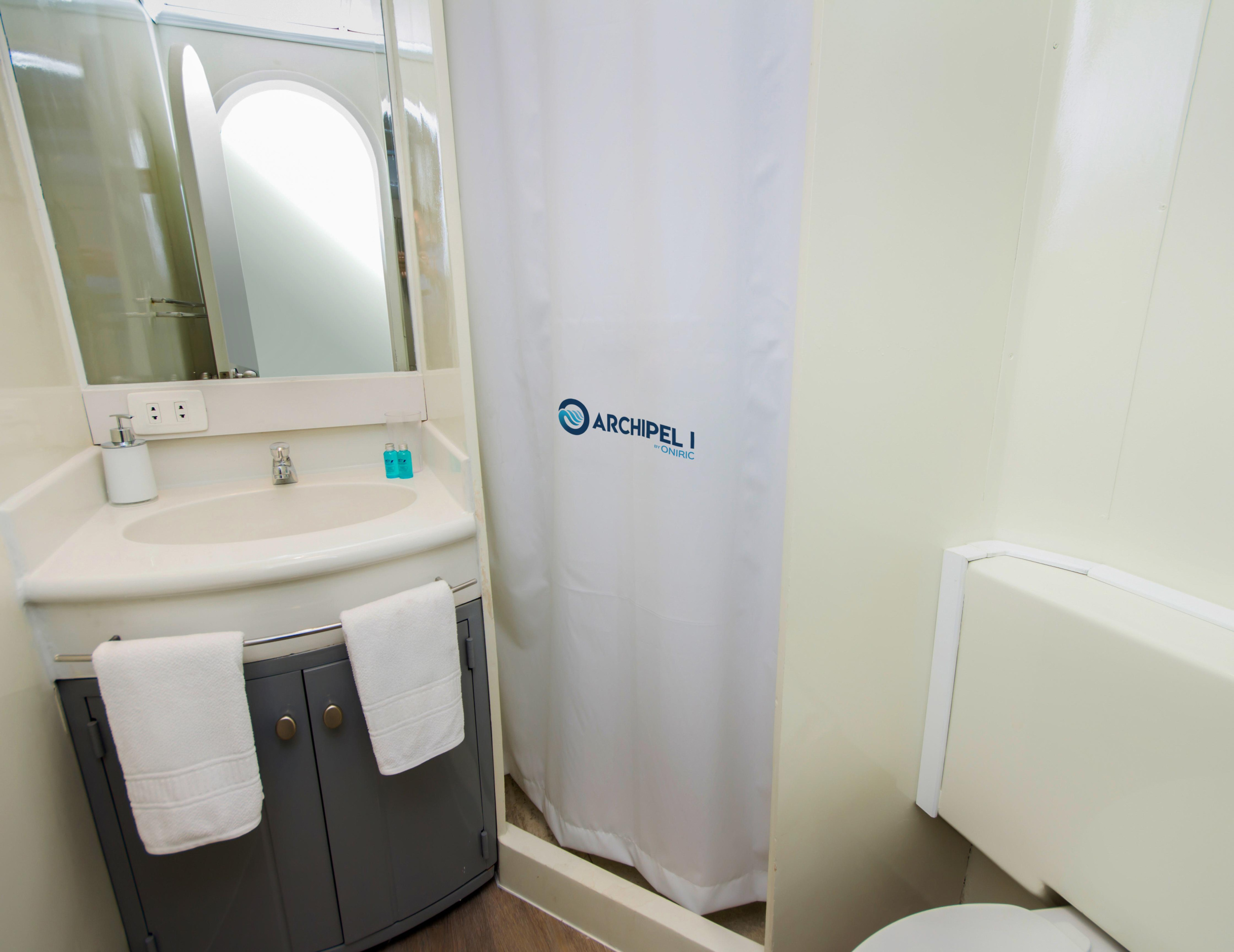
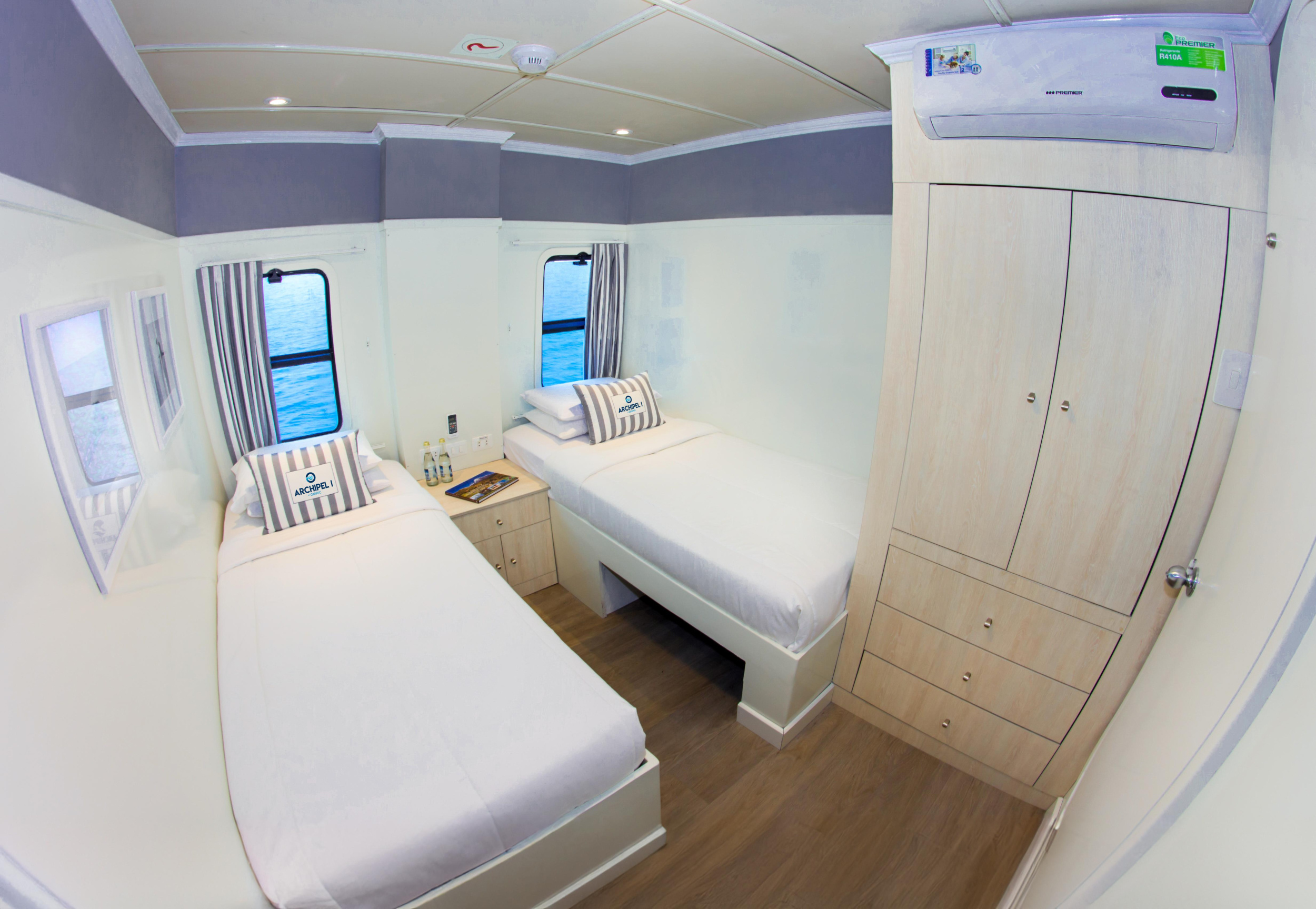
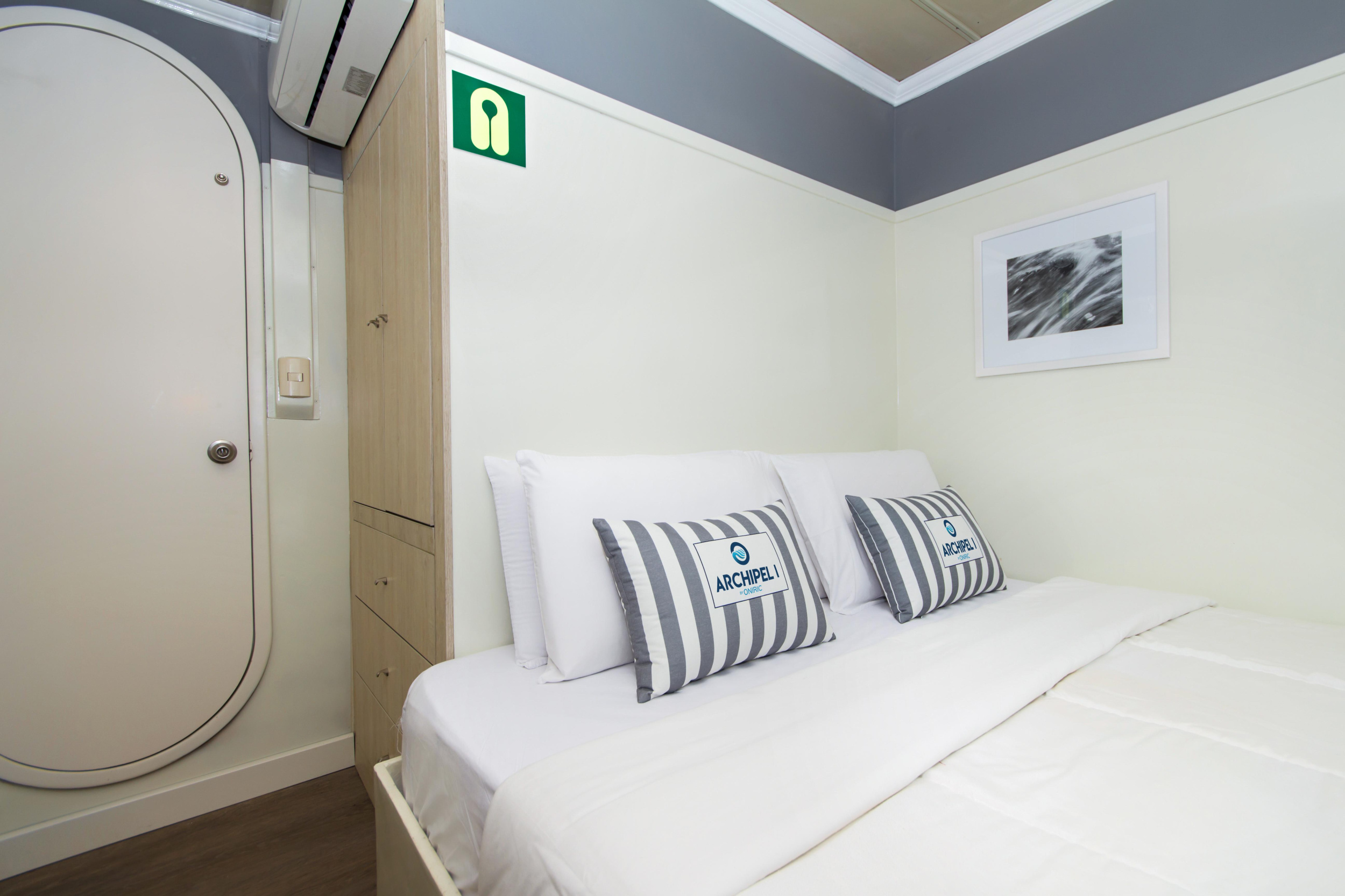
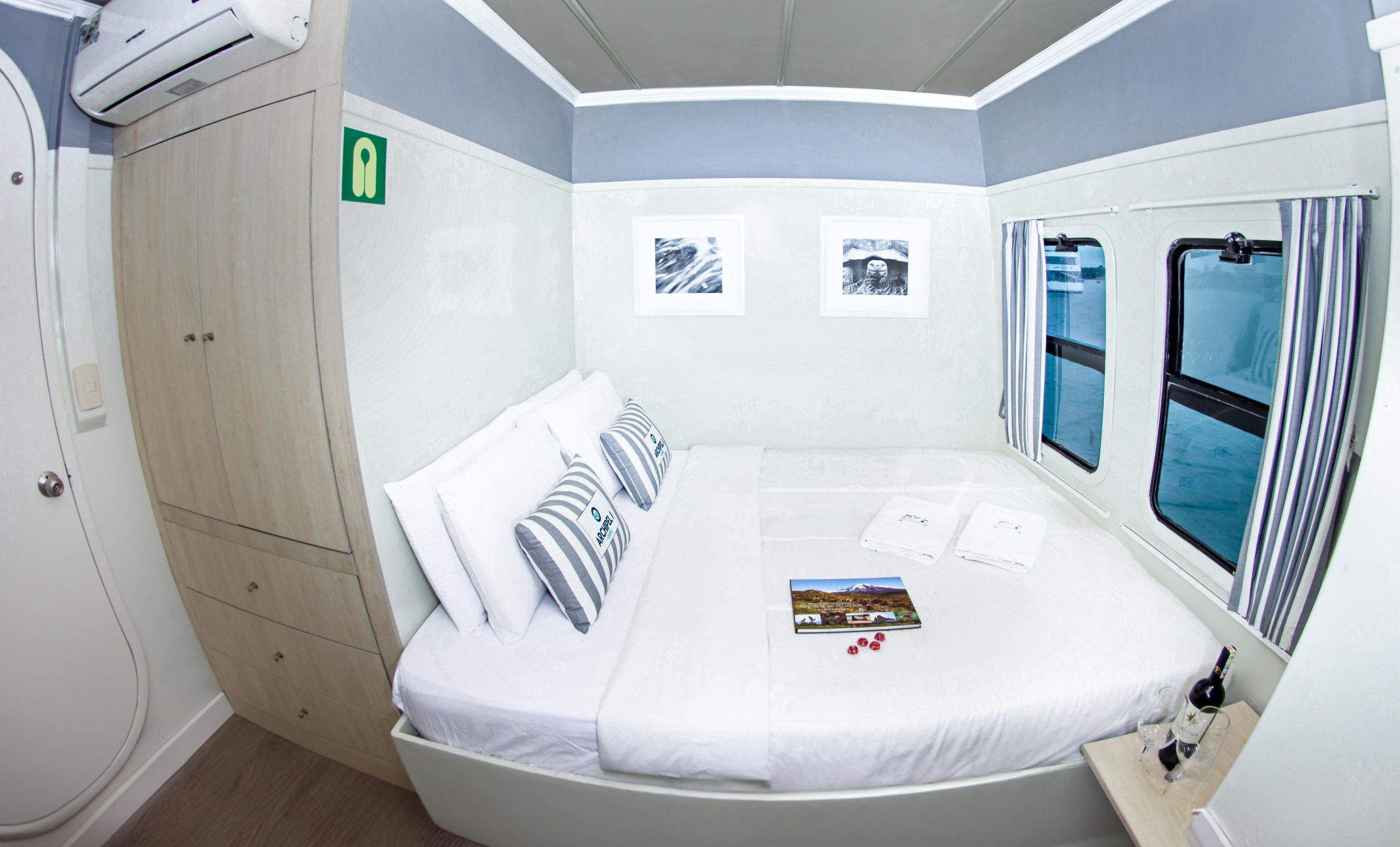
1/12
7 days
Crew: 9
16 people
Private cabin
Full board
8-Day Galapagos Cruise from San Cristobal to Baltra
Explore the Galapagos Islands on an 8-day cruise aboard Archipel I, a comfortable small ship designed for discovering the archipelago’s most remarkable wildlife and volcanic landscapes. This route starts in San Cristobal and continues to Santa Fe, South Plaza, North Seymour, Santa Cruz, Isabela, Fernandina, Santiago and Rábida before finishing at Baltra.
Along the way, visit giant tortoise reserves, seabird colonies, red-sand beaches, volcanic shores and sheltered coves where you may see marine iguanas, sea lions, Galapagos penguins, whitetip reef sharks, green sea turtles and flightless cormorants.
Sailing Cruise Itinerary
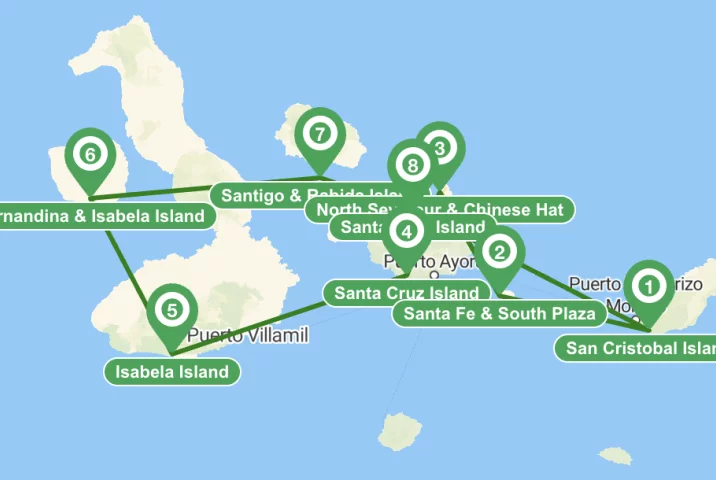
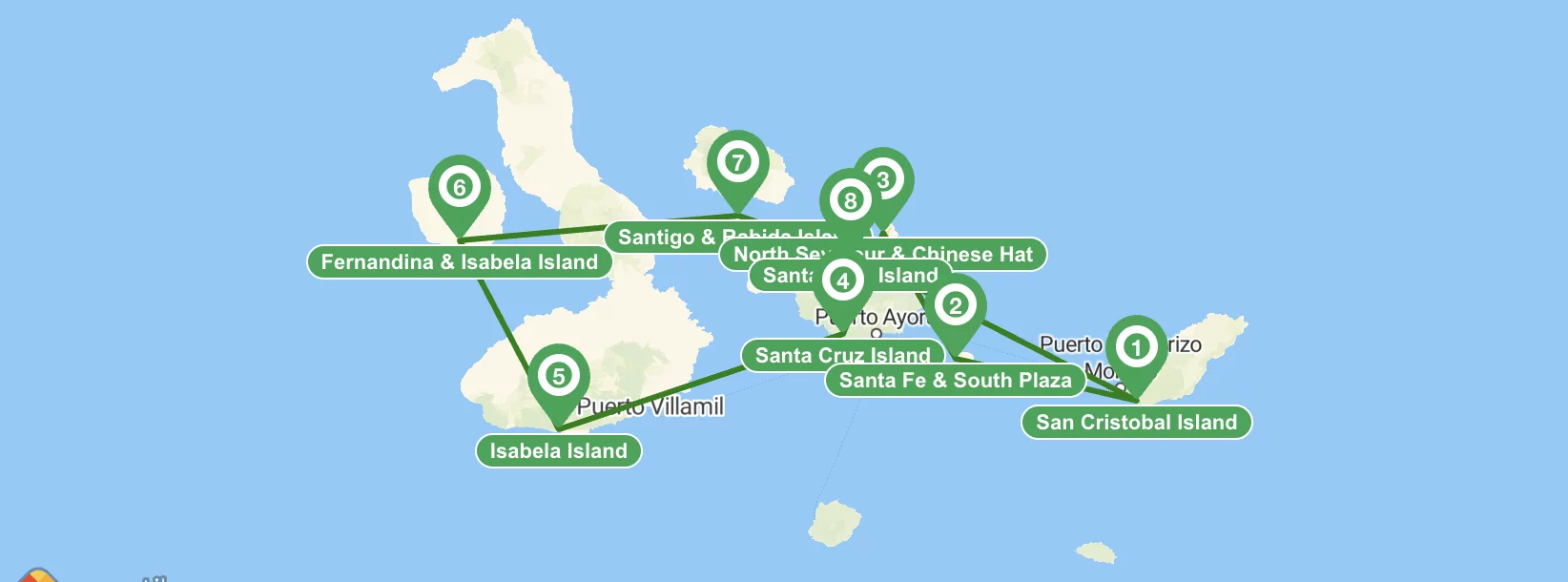
**This is a sample itinerary. The actual itinerary may be adjusted by the captain or the service provider due to weather conditions or other reasons.
Day
1
San Cristobal Island
AM - Arrival at San Cristobal airport Upon arrival at San Cristobal airport, you will pass through an airport inspection point to insure that no foreign plants or animals are introduced to the islands, as well as to pay the park entrance fee of $200 (unless it has been prepaid). A guide will meet you, help you collect your luggage, and escort you on a short bus ride to the harbour. PM - Interpretation Centre and Frigatebird Hill (San Cristobal) The Interpretation Centre, just outside the provincial capital city of Puerto Baquerizo Moreno, gives a perfect explanation of this unique archipelago. Its attractive exhibition is quite complete and helps you to get a clear overview and learn what makes this archipelago so unique. Information panels (in English and Spanish), pictures, documents, maquettes, and true-to-life dioramas tell various background and conservation stories about the islands in a different way. A short, though often hot, uphill trail with steps, leads from the Interpretation Centre to the summit of Frigatebird Hill. Four panoramic viewpoints show Puerto Baquerizo Moreno from above, as well as the bays on both sides of the headland. On clear days even the distant, offshore sculpture of Kicker Rock can be seen! These wooded hilltops are one of the rare places where some magnificent and great frigatebirds form a mixed breeding colony. A viewpoint with another Charles Darwin statue is a reminder that the HMS Beagle anchored in the exotic bay below
Day
2
Santa Fe & South Plaza
AM - Santa Fe Located in the southeastern part of the Galapagos, this island was formed from an uplift instead of a volcanic origin, which is why it is mostly flat. Some theories assure this could be the oldest island in the archipelago. Santa Fe is the home of several endemic species like the Galapagos hawk, Galapagos snake, Galapagos mockingbird, rice rats and one of the two species of land iguanas of the islands. After disembarking in the beautiful and clear waters, you will be in contact with one of the many sea lion colonies. Along the trail, many salt bushes can be seen as well as giant prickly pear cactus, gigantism is a characteristic of oceanic islands. PM - South Plaza South Plaza is located to the east of Santa Cruz Island, and forms part of a pair of islands known as “Islas Plazas”. Despite its small size, some of the most interesting and outstanding species of the Galapagos are found here. The Plazas land iguanas are smaller than their relatives found on other islands. There are several hybrid iguanas throughout the island; a result of crossing a marine iguana with a land iguana. They are unique and recognizable at first glance by their black/grey colour, with a land iguana’s crest, but the face and tail of the marine iguana. The big population of iguanas is due to the presence of prickly pears, their favourite food. Swallow-tailed gulls nesting in the rugged cliffs are seen along with other sea birds as Audubon shearwaters, red-billed tropicbirds, frigate birds and brown pelicans.
Day
3
North Seymour & Chinese Hat
AM - North Seymour Seymour is an uplifted (as opposed to volcanic) island and therefore is generally flat and strewn with boulders. There are good nesting sites here for a large population of magnificent frigate birds. Blue-footed boobies perform their courtship dance in the more open areas and swallow-tailed gulls perch on the cliff edges. Despite the tremendous surf that can pound the outer shore, sea lions haul out onto the beach and can be found bodysurfing. PM - Chinese Hat Chinese Hat is a 52 m/170 ft high volcanic cone, forming another islet right off the rocky coast of Santiago, where a small colony of Galapagos penguins have settled. Approaching Chinese Hat from the north, you will understand the meaning of the name. This is an excellent place to learn more about volcanoes, lava bombs and lava tunnels. You will arrive just in time to witness how this barren islet is colonised by pioneer species that have begun to sprout! Beautiful beaches of white coral sand and holes in the eroding lava fields are filled up with lava sand, which enables rooting. Galapagos sea lions and countless marine iguanas contribute to fertilisation and thus create many favourable options for newcomers, such as saltbush and the sesuvium carpet.
Day
4
Santa Cruz Island
AM - Twin Craters and El Chato Reserve (Santa Cruz) The native scalesia forest of El Chato Tortoise Reserve is the best place to search for Galapagos giant tortoises in their most authentic setting! Despite the interesting breeding centres – where you are guaranteed to find tortoises in their corrals – there is nothing better than to observe them in their wild environment. Though it can be quite moist and muddy, your visit may turn into an adventurous quest when they have left their favorite pond silently. The Twin Craters are found on either side of the road leading to Puerto Ayora. These impressive formations are not really volcanic craters and were formed by magma domes, which hardened on the outside while the lava continued flowing inside, leaving huge and empty magma chambers that eventually collapsed, leaving two large holes. The craters lie within a lush scalesia cloud forest, a high-altitude plant species that are endemic to the Galapagos. This area is also home to the carpenter finch, which uses tools to search for food. There may also be opportunities to see the vermillion flycatcher, a small red-breasted bird. PM - Fausto Llerena Breeding Centre (Santa Cruz) At this site, you can observe tortoises that come from various islands of the archipelago. They comply with the captive breeding programme and then return to repopulate the areas where their population has been affected. The land iguanas of Santa Cruz, Isabela and North Seymour are also in a captive breeding programme, as the populations in these areas suffered from feral dogs. One of the main attractions is the famous embalmed Lonesome George. Estimated to have died between 93 and 109 years of age, it is recognised as the last of its kind and a symbol of the efforts invested to conserve endangered species. The captive tortoises are used to the presence of visitors, so it's a great place to take photos with them.
Day
5
Isabela Island
AM - Moreno Point (Isabela) Moreno Point is located on the north coast of Isabela Island, between the volcanos Sierra Negra and Cerro Azul. The trail runs along a solidified pahoehoe lava flow into a complex of coastal lagoons. Its main attractions are several species of birds, which are found around the lakes and mangroves. PM - Urbina Bay (Isabela) Urbina Bay is located along the west coast of Isabela, between Elizabeth Bay and Tagus Cove. It is close to the base of the Alcedo Volcano. The coastline has undergone a major uplift in 1954, which caused the shore to expand three quar ters of a mile out. Here you will be able to find corals, shells, and many other calcareous organisms exposed above water. Urbina Bay is home to large and colorful land iguanas and giant tor toises of the Alcedo Volcano population. A lot of Darwin finches can be seen as well
Day
6
Fernandina & Isabela Island
AM - Espinoza Point (Fernandina) Fernandina is the third-largest island in the archipelago and has a single visitor site: Punta Espinoza, located at the northeastern tip of the island. Marine iguanas conglomerate in larger groups than on any other island. They bask around in the sand, swim near the shore and sometimes block the way at the landing dock. Among the unique species found here, is the flightless cormorant. This bird had to adjust its way of survival and perfection its skills of finding food in the ocean. Their wings, tails and feet progressively adapted for swimming. To see these birds is to witness evolution happening right in front of you. PM - Vicente Roca Point (Isabela) Whilst having lunch we will cross the Bolivar Channel for the last time to Vicente Roca Point, just at the mouth of Isabela’s seahorse-shape. While entering a dark cave below a spectacular arch, roaring echoes of the waves will accompany you. Just around the corner the collapsed amphitheatre of Volcan Ecuador offers another impressive view. The calmer waters of the coves are well-protected against the ocean swell and are a fairly cold, but great place for snorkelling amongst various species of shark, penguins, puffer fish and even seahorses!
Day
7
Santigo & Rabida Island
AM - Egas Port (Santiago) Puerto Egas is a black beach located on the west side of Santiago Island. Volcanic tuff deposits have favoured the formation of this special black sand beach and this is the main attraction of the Island. This site is called Puerto Egas because there was an attempt of Hector Egas to start the exploitation of salt, which failed. After all, the price of salt on the continent was very cheap and did not justify its exploitation in the Galapagos. The project was abandoned and they left their infrastructure. PM - Rábida Rábida Island is unique because of the red colour of the rocks and sand. The volcanic material in this island is very porous and external factors such as rain, saltwater and sea breeze have acted as an oxidizing agent. A short walk along a trail will lead you to a coastal lagoon behind the beach that allows for the observation of land birds as finches, doves, yellow warblers and mockingbirds. There is also a colony of flamingos at the lagoon.
Day
8
Santa Cruz Island
AM - Black Turtle Cove (Santa Cruz) After breakfast, you will check out and disembark the cruise for the last time at 08:30 am. Your last adventure is brief but enchanting, and will take place enroute to the airport. You will explore onboard the dinghy the green landscape of Black Turtle Cove, which is mostly composed of mangrove trees that host innumerable aerial and aquatic species. Observe how the quiet emerald lagoon and surrounding shallow bays enables the easy observation of sea turtles and as well as groups of sharks. The visit ends and you will disembark at 09:00 at Baltra island, ultimately reaching Baltra airport at 09:30, where its the official end of your cruise adventure. It has been a pleasure accompanying you on this unique trip and we hope to see you again very soon!
Cruise Boat Details
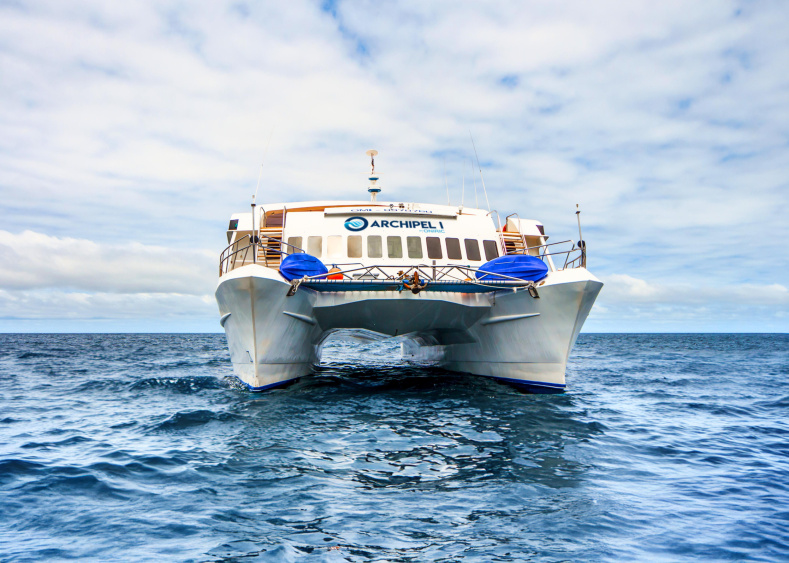
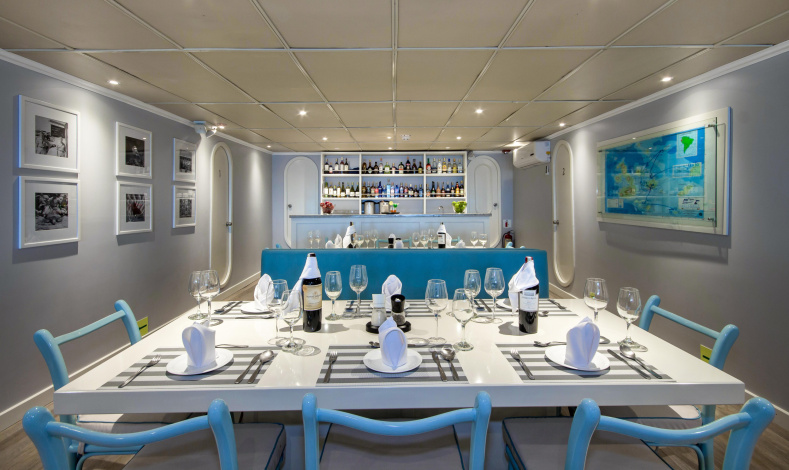
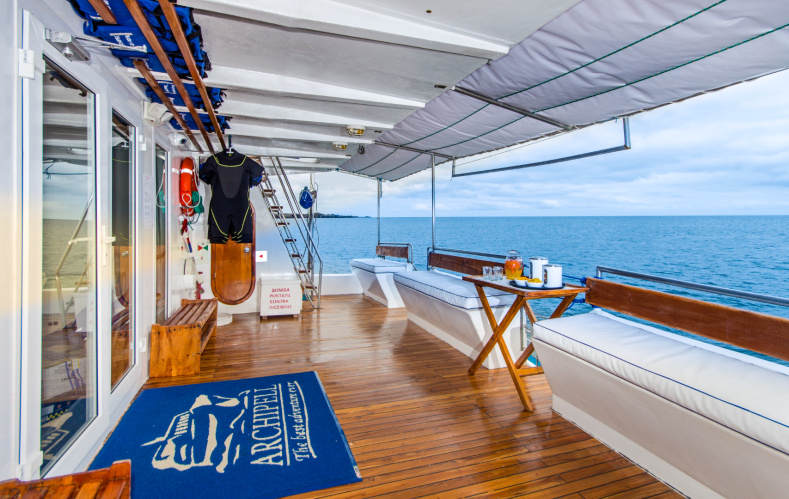
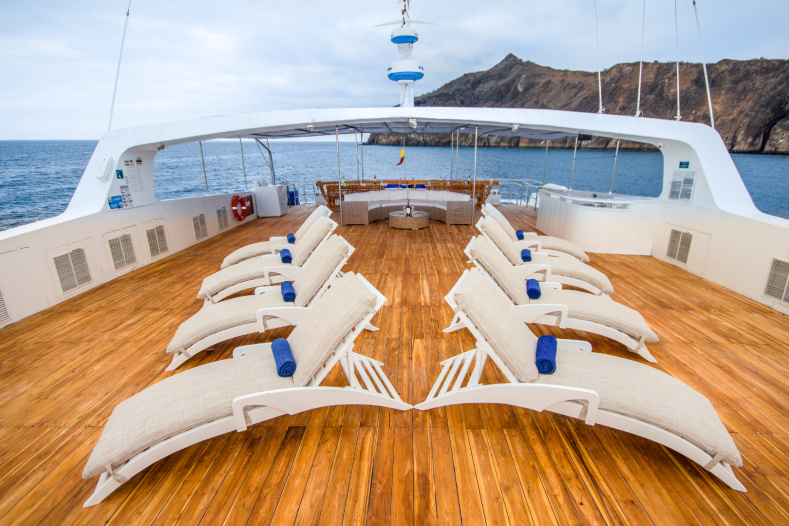
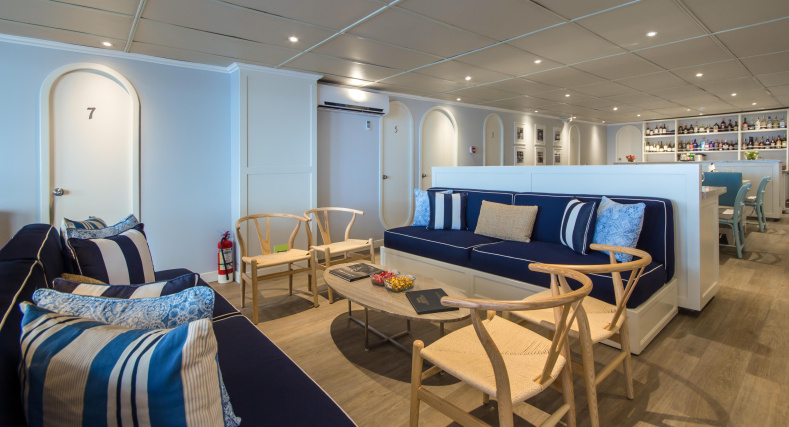
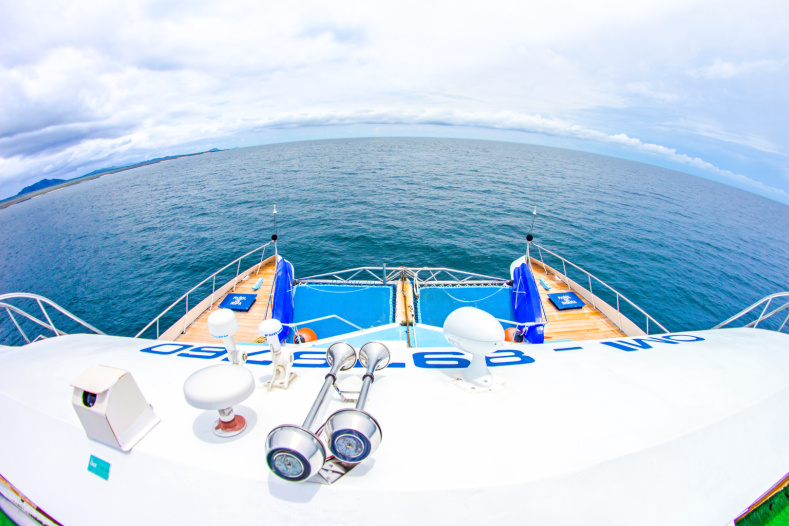
6
Model
Motor Catamaran
Cabins
8
Year/Refit
2005
Catamaran 27m (2005)
Model
Motor Catamaran
Cabins
8
Year/Refit
2005
Cabin Charter Types
6
Standard
shower
toilet
coach
NA
Per person
for 7 days from $5,295
for 7 days from $5,295
Occupancy: 2 guests per cabin
0% due at reservation
Free cancellation within 3 days
Cruise Price Details
Price includes
- Lodging on board in a cabin with private facilities.
- Three meals per full-day; unlimited water, coffee and tea.
- All excursions as mentioned in the itinerary with one English speaking naturalist guide.
- Use of kayaks (if applicable).
- Snorkeling gear (masks, flippers and snorkel).
- Airport-yacht-airport transfers (only guaranteed if passengers arrive at the scheduled meeting point, date and time).
Price does not include
- Roundtrip flight to Galapagos Islands.
- Galapagos National Park entrance fee (USD 200 pp) - to be paid in cash
- Transit Control Card (USD 20 pp)
- Wetsuit (rental is charged per cruise and not per day)
- Other rental equipment.
- Soft and alcoholic drinks
- Tips
- Travel insurance (Medical coverage, Trip cancellation) and other items of personal nature.
Good to know
Read useful information about this charter
Location
- Puerto Baquerizo Moreno, Ecuador
- Puerto Ayora, Ecuador
The departure base depends on the sailing dates you select.
Check-in / Checkout
Check-in: Monday from 13:00
Check-out: Monday until 08:30
Cruise duration is 7 days / 7 nights.
Accommodation
Private cabin
Private cabin for 2 guests. If the cabin is booked for 1 guest only, a single accommodation surcharge will apply.
Crew
The sailing tour from Puerto Baquerizo Moreno is operated by a professional crew of 9: captain, chef or hostess, and additional crew.
The captain of the Motor Catamaran is responsible for: the safety of guests during Galapagos Small Ship Cruise on Archipel I, handling of the Catamaran, navigation and adjusting the itinerary according to weather conditions.
Meal Plan
Full Board
Breakfast, lunch, and dinner are included in the price. Meals are prepared by the chef and served onboard of the yacht. Soft drinks are included during meals.
Alcoholic drinks can be purchased on board of Motor Catamaran at an additional cost. Guests are not allowed to bring their own alcohol on board.
If you have food allergies or intolerances, please inform us in advance so the crew can take them into consideration.
Options & Fees
Mandatory fees
Galapagos National Park entrance fee: $200 per person, Transit Control Card: $20 per person, Galapagos Flight Ticket: $580 per person
To be paid in advance in addition to the cabin or berth price. This fee typically covers: port fees, tourist taxes, fuel costs, marina fees in Ecuador and basic provisioning.
Sailing Itinerary & Weather Conditions
The 7 days itinerary is planned in advance; however, Galapagos Small Ship Cruise on Archipel I may be adjusted depending on weather conditions, port availability, and the captain's safety decisions.
The captain may modify the route or change the order of stops to ensure a safe and comfortable sailing experience on board of Motor Catamaran.
Payment & Cancellation
No-obligation reservation (3 day hold).
No payment is required until the booking agreement is signed.
Payment terms:
- Down payment: 30%
- Balance: due 60 days before departure
- Extras: payable in advance, at least 60 days before the charter
Cancellation policy:
- 30% of the charter fee is retained for cancellations made 61 days before departure
- 100% of the total charter fee is non-refundable for cancellations made 60 days or less prior to the charter
Payment and cancellation terms are provided for reference only. Final terms are defined in the booking agreement.
Customer reviews
How customer reviews and ratings work
We use the Average with Prior (also known as Bayesian Average) to calculate the total rating for each sailing cruise
Since new cruises could have very few reviews, each review can significantly impact the average score, potentially leading to misleading representations of the total score (e.g., one very positive or very negative review skewing the overall rating). To mitigate this, we use a "prior" or "default" score.
This means that each cruise, by default, starts with a rating of 4, which is calculated from 5 hypothetical reviews, each rated 4. This assumption provides a baseline level of performance that is neutral-to-positive.
For example, if a new cruise receives a 5-star review, the total rating will be adjusted to 4.17. Here's how it is calculated: (4 × 5) + 5 = 25 and then divided by the total number of reviews 6 (5 default + 1 actual review), resulting in 4.17
As more reviews come in, the weight of the actual reviews increases, and the influence of the prior diminishes.